
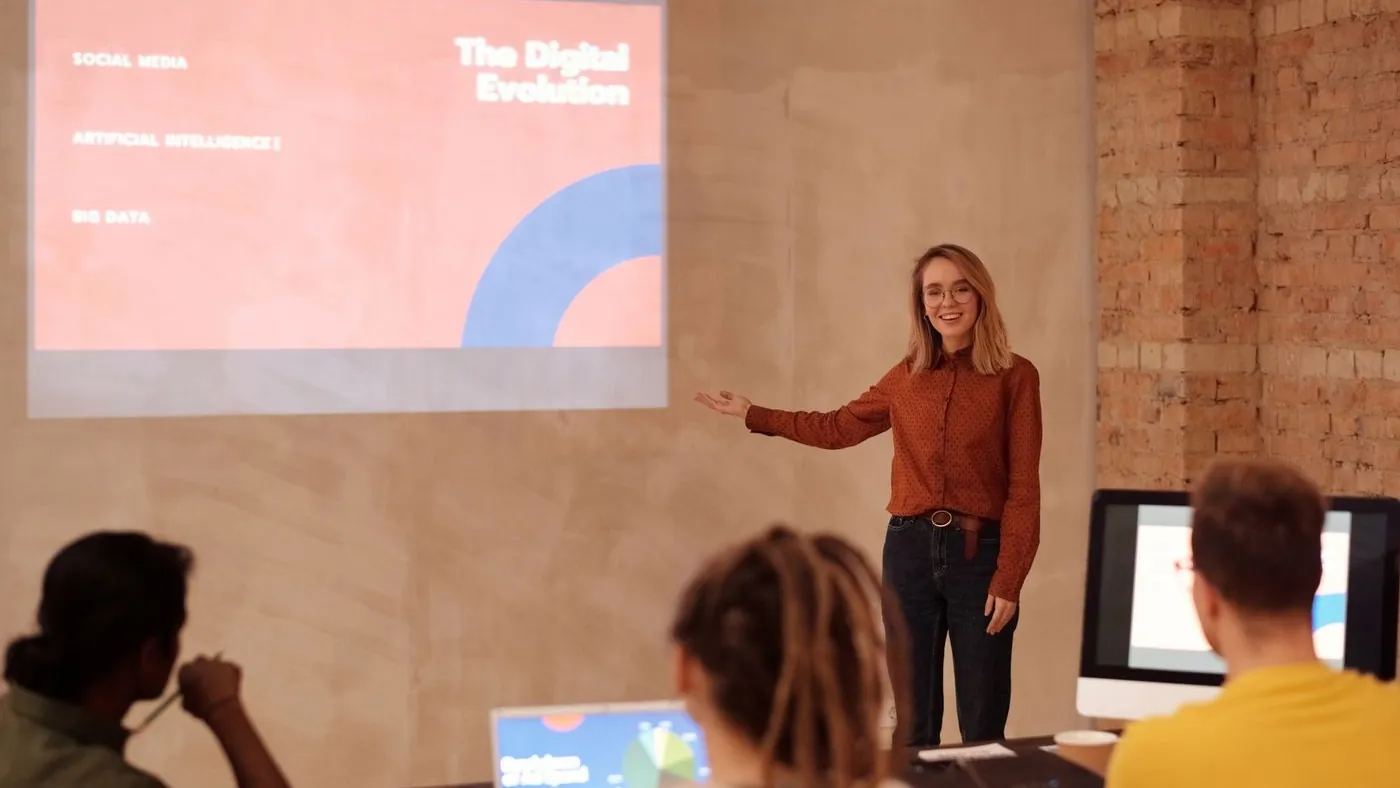
Start a presentation with something that makes the audience lean in, a question, a story, a surprising fact or a clear promise, and save the introductions and thank-yous for a sentence later. End with one clear takeaway or action, not "so, any questions?" Learn both by heart so you are never reading from your notes at the two moments that matter most.
Why the first minute matters so much
In the first minute, your audience is deciding whether this is worth their attention. It is also when your nerves are at their highest. That combination is why openings go wrong: people fall back on the safe, forgettable lines ("Hi everyone, thanks for having me, so today I'm going to talk about…") because they are easy to say while anxious.
This is why Earl tells people not to memorize the whole speech, but to memorize the opening and the closing. You do not want to be looking at your notes right off the top. It does not show your confidence or your authority.
Seven ways to open
- 1Ask a question they can answer in their heads. "How many of you checked your email before you got out of bed this morning?" It turns listeners into participants.
- 2Tell a short story. Thirty seconds about a real moment: a customer, a mistake, a phone call. Stories are the fastest way to get a room's attention.
- 3State a surprising fact. One number that changes how people see the topic. Make sure it is accurate and you know the source.
- 4Make a promise. "In the next 15 minutes, you'll learn the one change that cut our onboarding time." Then keep it.
- 5Describe a scene. "Picture the last meeting you sat through that should have been an email." Ask them to imagine something they have lived.
- 6Use a quote, carefully. Only if it is short, genuinely relevant and not one everyone has heard a hundred times.
- 7Start with a bold statement. "Most of our reports are never read." Then spend the talk proving it.
Openings to avoid
- Apologizing. "I'm not much of a speaker" or "sorry, I'll try to be quick" tells the audience to expect less.
- Reading the title slide. They can see it.
- A long agenda. Three points, said in one sentence, is a road map. Ten bullet points is a reason to check their phones.
- A joke you don't believe in. Humour can be a great opener, but only if it suits you and the room. For ideas, see Earl's tips on adding humour to a speech.
- Tech trouble. Arrive early, test the screen and clicker, and have the first slide up before you start.
Deliver the first line well
- Walk to your spot, plant your feet, and look at the room before you speak.
- Take one full breath from the diaphragm. Our breathing exercises explain how.
- Say your first line to one person, slowly and clearly. Then pause and let it land.
How to end a presentation
Endings are where many good presentations go soft. The speaker runs out of slides, says "so… yeah, that's it", and the audience is left to decide for itself what the point was. Plan the last minute as carefully as the first.
- 1Signal the end. "Let me leave you with one thing." People pay closer attention when they know the end is near.
- 2Restate your main point in one sentence. If they forget everything else, what should they remember?
- 3Ask for something specific. Approve the budget. Try the new process on Monday. Visit the website. A presentation without an ask is just information.
- 4Come back to the opening. If you started with a story or a question, return to it. It gives the talk a satisfying shape.
- 5Stop, and say thank you. Then stop talking. Hold eye contact for a moment.
Handle Q&A without losing your close
"Any questions?" is a weak final line, because the last thing people hear might be an awkward silence or an off-topic question. Instead, take questions before your final close: "Before I finish, what questions do you have?" After the last question, deliver your prepared closing line. That way you, not the Q&A, have the last word.
Practise the bookends
Rehearse the first and last minute out loud more than anything else. Record them. Say them to someone. When the start and finish are automatic, the nerves have far less to work with, and the middle can be more relaxed and conversational.
If you have a presentation coming up and want someone to hear it before your audience does, presentation skills training works on exactly this: structure, delivery and rehearsal. For teams who present to clients or leadership, it can be part of corporate training.